
Pelham Hall – London architectural gem on Lambeth Walk
Morley’s Pelham Hall on Lambeth Walk celebrates 50 years as inspiring sculpture studio with a fascinating backstory.
Fifty years ago a former Edwardian chapel on Lambeth Walk called Pelham Mission Hall was converted into Morley’s sculpture studio. Generations of students have enjoyed a wide range of sculpture courses at Pelham Sculpture Students – from clay life modelling, wearable sculpture, to metal construction, stone and wood carving, and bronze and pewter casting. Now a new exhibition at Morley Gallery – Pelham Hall@50 celebrates the art of sculpture created by staff who’ve worked at Pelham Hall over the past five decades.
The Pelham Mission Hall Story
Morley’s home for sculpture is a converted chapel steeped in the social history of Lambeth. The Hall was built in 1910 and commissioned and paid for the by St-Mary-at-Lambeth Church on Lambeth Palace Road, situated next door to Lambeth Palace, which itself dates back over a thousand years to 1062.
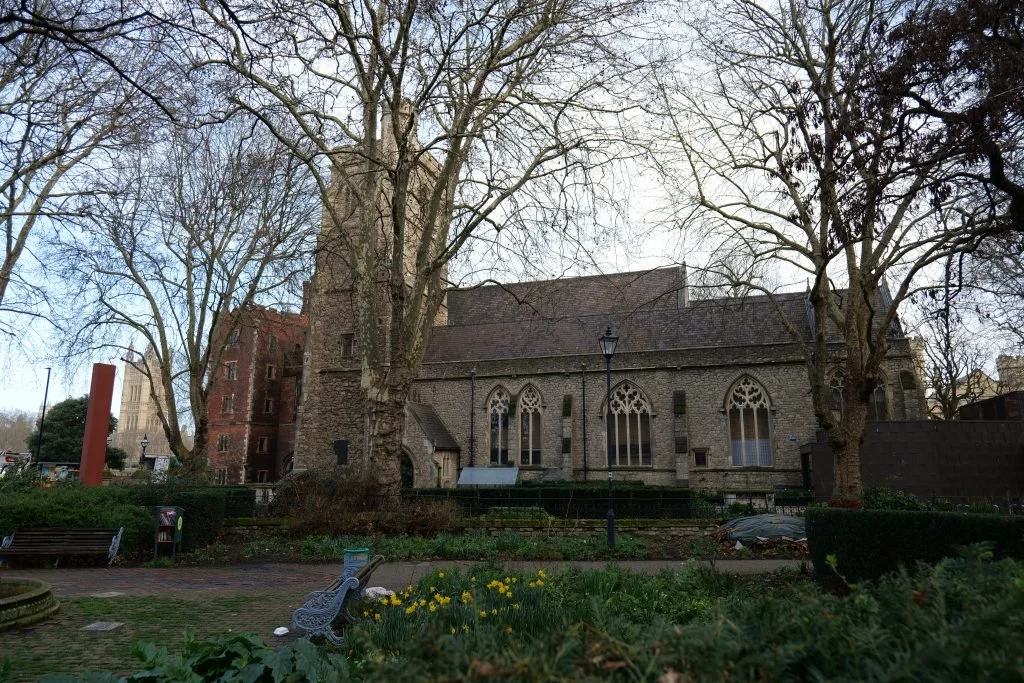
St Mary at Lambeth Church – now The Garden Museum
The Pelham Hall chapel is a stone’s throw from St Mary at Lambeth. In 1910 it was designed to be a mission what the Rector of Lambeth described as “the poorest part of our poor parish”.
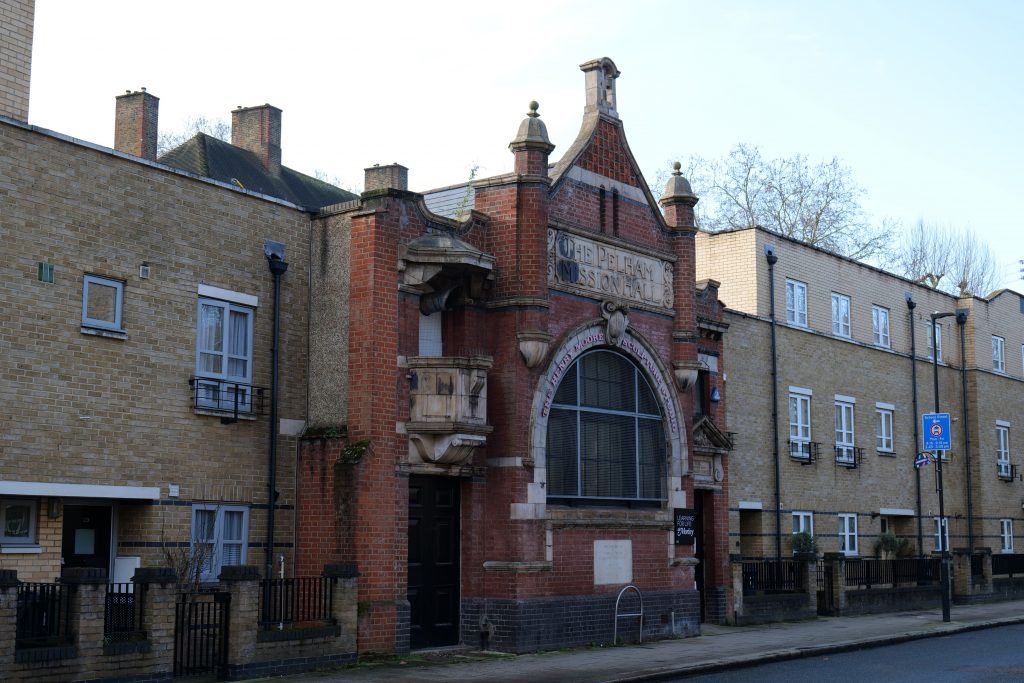
Pelham Mission Hall
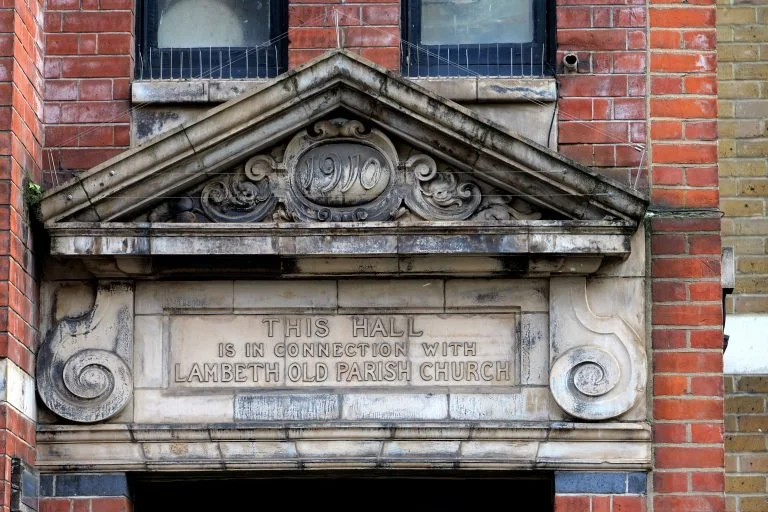
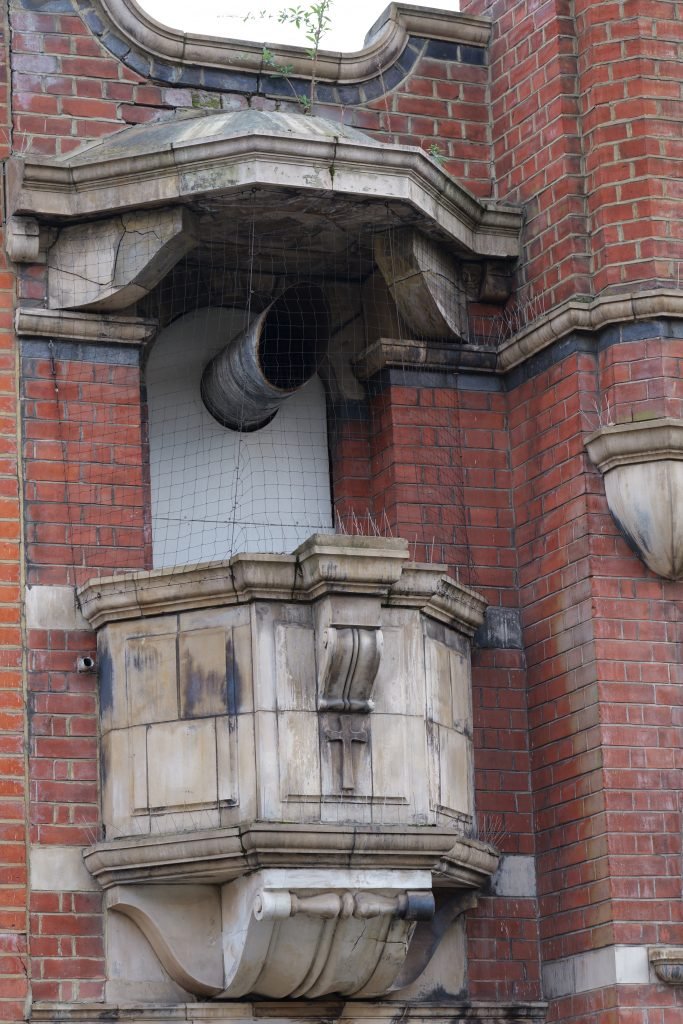
An external pulpit
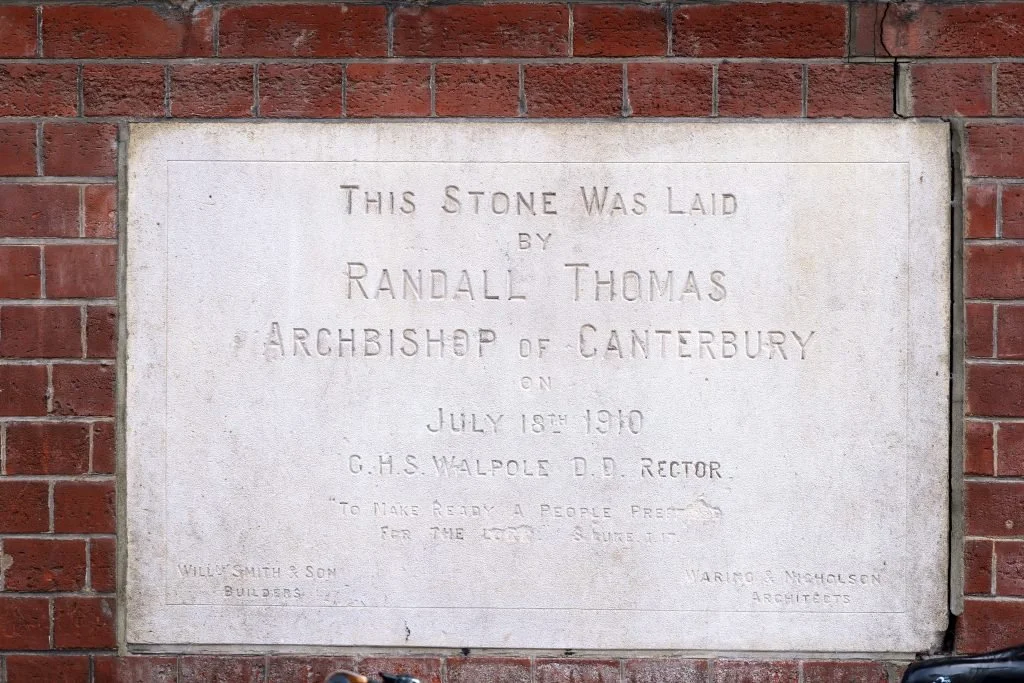
The foundation Stone was laid in a public ceremony hosted by the Archbishop of Canterbury, The Most Reverend Randall Thomas Davidson, on July18th 1910. What sets Pelham Hall apart architecturally is a highly distinctive external pulpit.
Canon Pelham, former Rector of Lambeth
The Morning Advertiser reported on the foundation stone ceremony stating that the new building would be named Pelham Mission Hall after the late Canon Pelham, who had been Rector of Lambeth for eleven years. The Archbishop said “their late friend [Canon Pelham] was an athlete, a cricketer, a man among men, a friend whom everyone who knew him loved” and added that Canon Pelham would have wanted such a mission there.
Fundraising letter to the editor
Months later, in August 1910, the Bishop of Edinburgh (and Rector of Lambeth) wrote a letter to The South London Press detailing the thinking behind the new Mission Hall and requesting donations towards the cost.
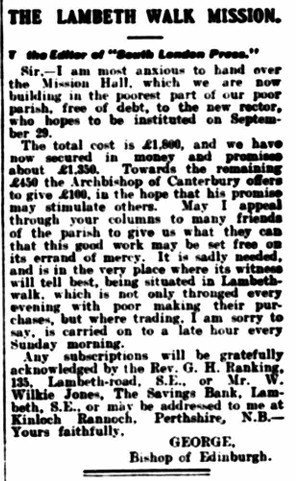
The letter says: “Sir, I am most anxious to hand over the Mission Hall, which we are now building in the poorest part of our poor parish, free of debt, to the new Rector, who hopes to be instituted on September 29. The total cost is £1800, and we have now secured in money and promises about £1330… May I appeal to the many friends of the parish to give us what they can that this work may be set free on its errand of mercy. It is sadly needed and it is in the very best place where it its witness will best, being situated in Lambeth Walk, which is thronged every evening with poor making purchases, but where trading I am sorry to say is carried on to a late hour every Sunday evening.”
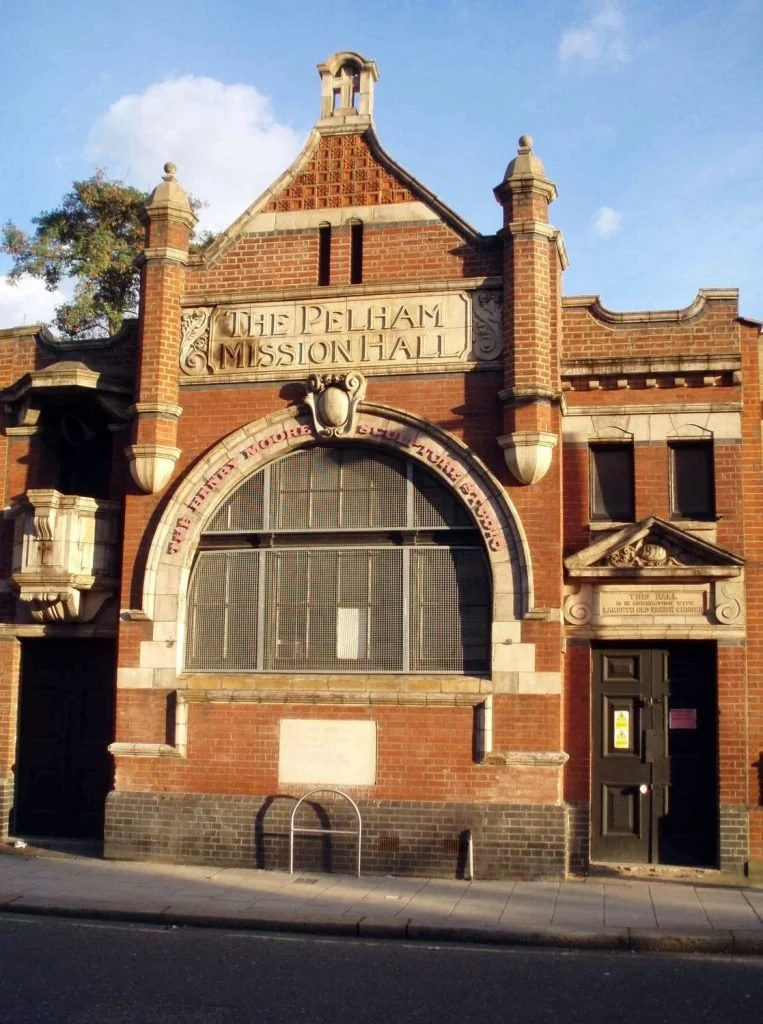
Distinctive Design
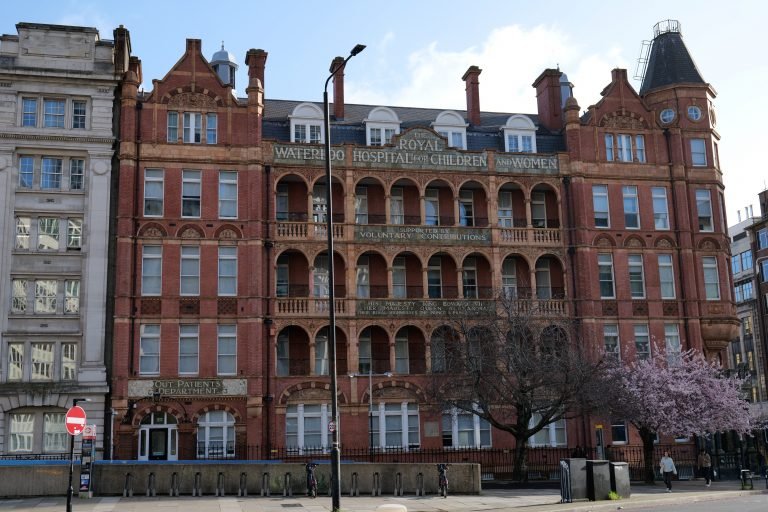
Pelham Mission Hall was designed by notable architects Waring and Nicholson – who were already well-known in the area for creating the landmark building – the Royal Waterloo Hospital for Children and Women on the corner of Waterloo Bridge Road, and possible involvement in the iconic former Royal Doulton headquarters building, 28 Lambeth High Street. The three buildings share the Royal Doulton terracotta brick facade.
Lambeth Street Market, 1934
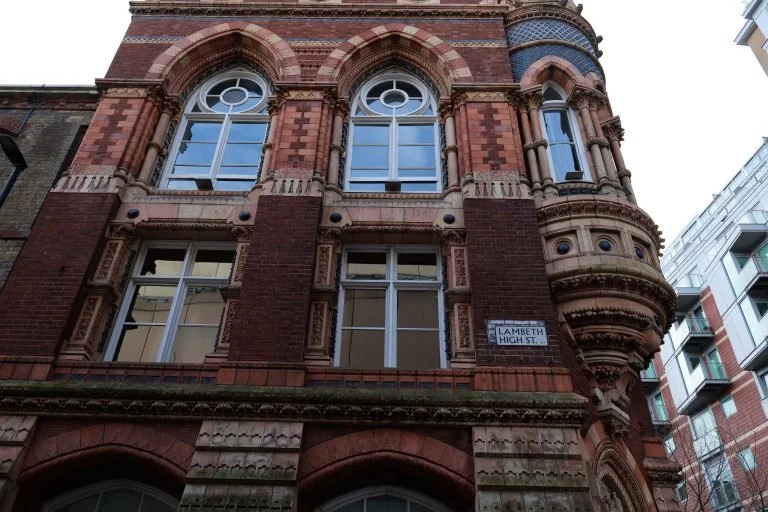
Waterloo Hospital for Women and Children
Years later, The Lambeth Walk would be made famous in a song called ”Doing the Lambeth Walk” in the 1934 hit musical ”Me and My Girl”. The famous song and connection to Royal Doulton are captured in a series of murals on display in Lambeth Walk today.
The purchase of the Pelham Hall by Morley College in 1976
By the mid nineteen seventies, the fortunes St Mary’s at Lambeth had dramatically changed. Faced with demolition, the church was saved and converted into the Garden Museum in 1977 – “celebrating the art, history and design of gardens”.
Meanwhile, Pelham Hall was bought by Morley College, following years of fundraising work by Morley Principal Barry Till. £6000 was raised which included the gift of a sculpture by Sir Henry Moore, sold at auction and the proceeds put towards the purchase of Pelham Hall’s lease. Later the studio was renamed ‘The Henry Moore Sculpture Studio’ in recognition of Moore’s generosity”.
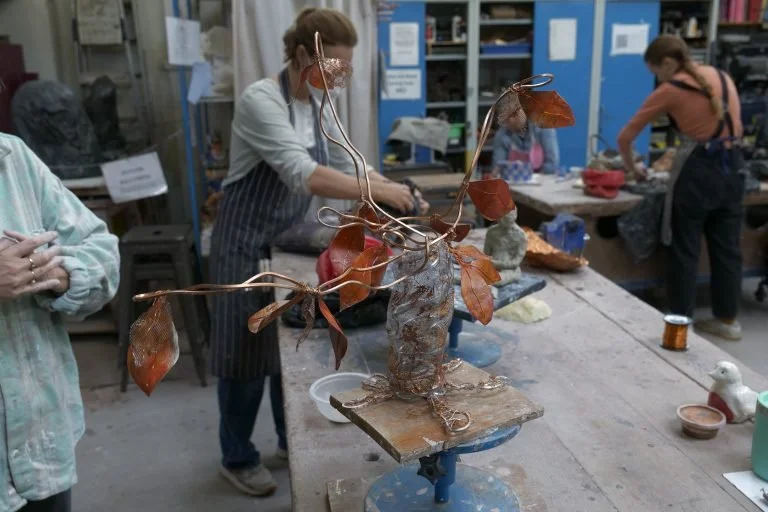
The new was studio opened in July 1976 by the new Minister for Arts Lord Donaldson who said that anyone teaching sculpture in the studio was “doing God’s work” and wished the project success.
Multi-media Sculpting
From the outset the new studio attracted students drawn by the building, community and expertise of the tutors. Sheila Vollmer led the sculpture department at Morley for twenty years is co-curator of the current Pelham Hall @50 exhibition with co-curator and tutor Alexandra Harvey.
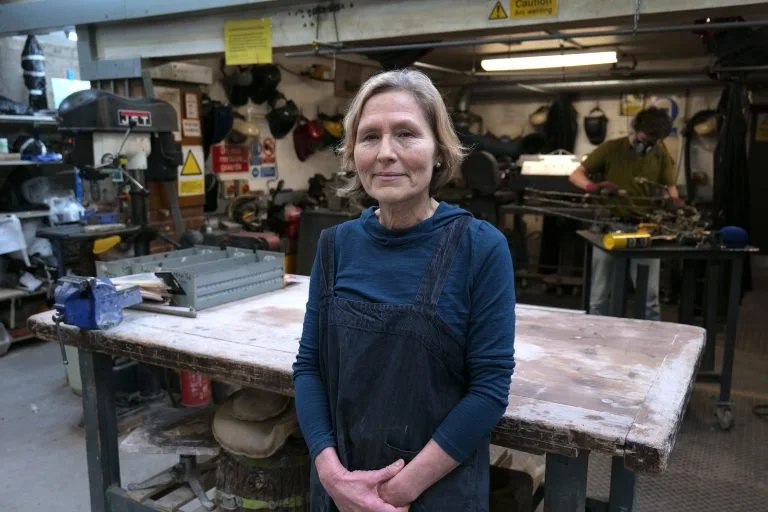
Sheila Vollmer, former Head of Sculpture, Morley College London
Sheila says ”The Pelham Hall studio became this wonderful site of making, I think, starting with a stone carving and life-modelling. I started here over 30 years ago and brought the first metal class, renting the equipment. And later on we’ve just become so well-equipped. Now we’re doing bronze casting and pewter casting. And every sort of imaginable metalwork and forging. In 2011, we had a refurbishment, insulating the roof and getting these wonderful skylights, and making this a much safer space. It’s really multi use.”
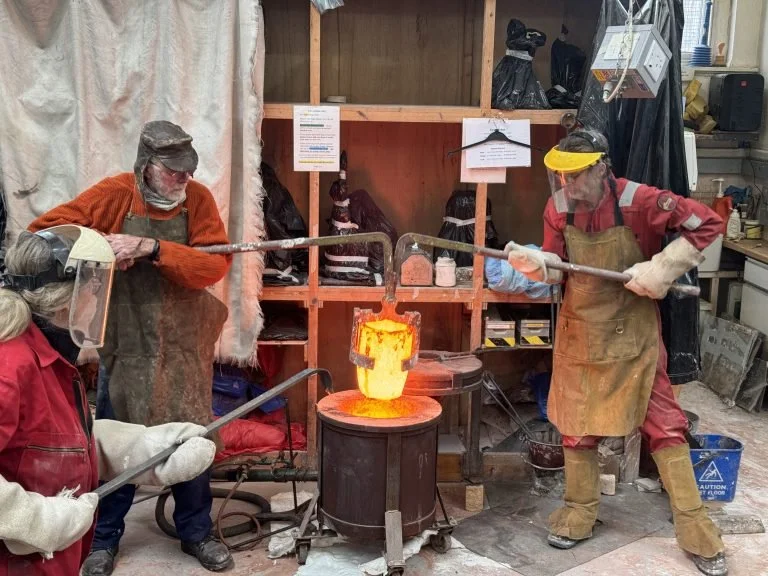
Bronze Casting
Sculptural excellence
The department has attracted talented sculptors and tutors over the years. “We’ve had really interesting tutors over the years. Jane McAdam Freuds, daughter of Lucian Freud and granddaughter of Sigmund Freud. Everton Wright, Hazel Reeves, who teaches with us and has done the wonderful commissions of suffragettes one being Emmeline Pankhurst in Manchester. So we have really specialized, skilled tutors that come and work with us, which we’re is celebrating our 50th anniversary.
Growing public interest in sculpture
“I think sculpture is growing in popularity. And I think more people are choosing to explore it in 3D medium and in materials. And there’s more and more of a tradition of, of sustainable materials and materials that people can easily source, possibly less so with the traditions of, bronze and stone and things. It may be more expensive. So I think it’s growing more and in that way and becoming more accessible. It’s been 50 years. We’re celebrating a huge, diversity of skills and students and tutors that have come through our doors. And long may it continue!”
The Pelham Hall at 50 exhibition runs at Morley Gallery until 28th March 2026. Discover our sculpture courses at Pelham Hall. It’s never too late to try your hand at sculpting!
With thanks to Elaine Andrews for her amazing historical research.